


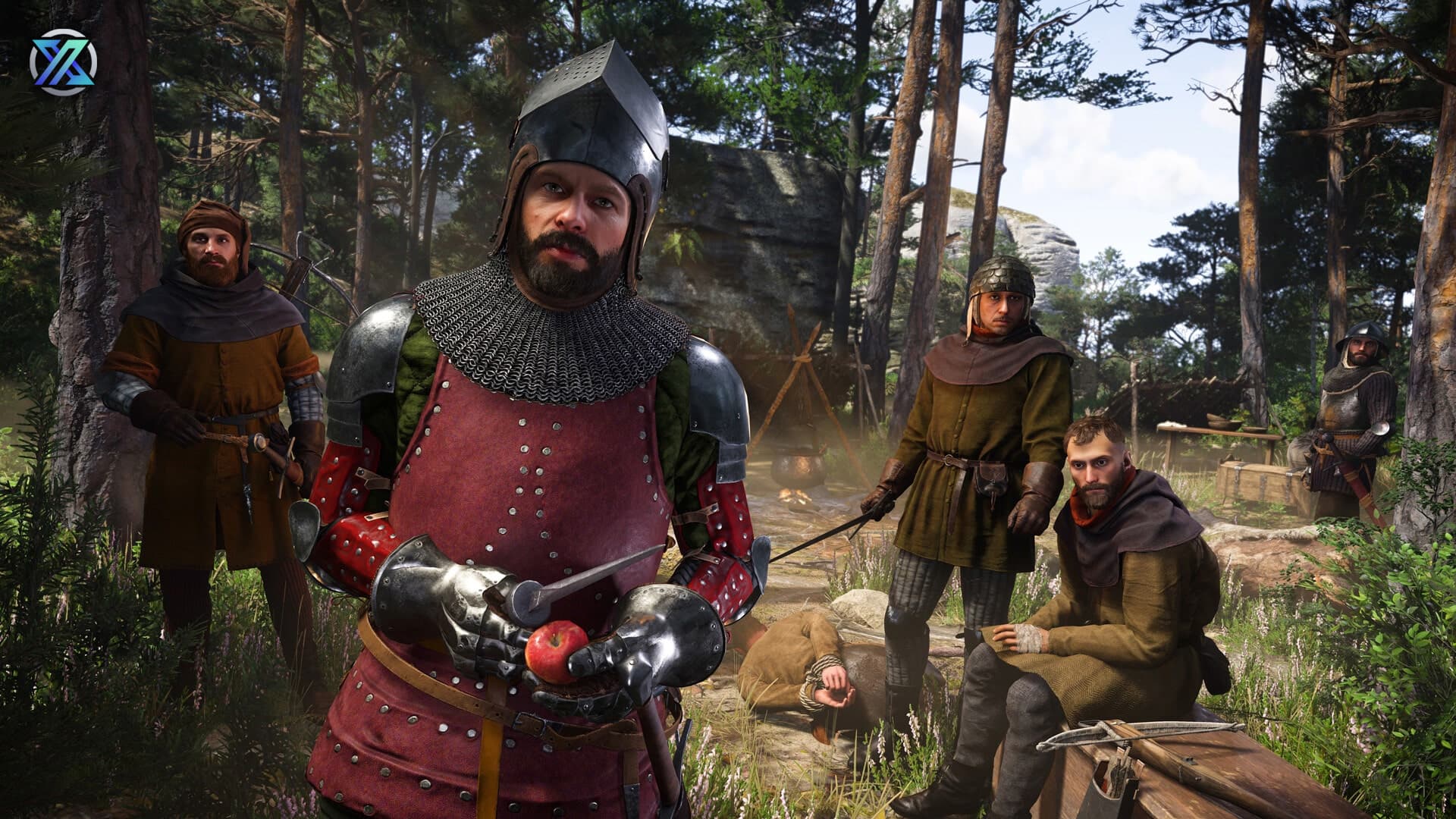
“When a studio changes its engine, it is not just upgrading tech; it is choosing what kind of future it wants.”
Warhorse Studios has never been the kind of developer that plays it safe. From the moment Kingdom Come Deliverance launched, it was clear this was a team willing to trade comfort for conviction. Historical realism over fantasy shortcuts. Systems over spectacle. Ambition over polish, at least at first.
That is why reports claiming Warhorse’s next game is being built in Unreal Engine feel so important. Not because Unreal Engine is surprising.
Advertisement
Warhorse has resisted this move for years now, even though everyone is using it. When a studio like this finally switches engines, it usually means something deeper is changing behind the scenes.
Advertisement
This is not just a technical upgrade. It feels like a reset.
How this surfaced without a big announcement
No dramatic reveals or over-the-top cinematic trailers. Instead, quietly and through job listings, internal references, and community sleuthing, was how the news was broken.
Advertisement
Unreal Engine experience started appearing as a requirement in Warhorse-related roles. Backend references pointed away from their proprietary tech. Developers hinted without saying anything outright.
Over time, the pattern became hard to ignore. Warhorse is actively developing a new project using Unreal Engine, very likely Unreal Engine 5. This does not look like a prototype or a side experiment. Hiring patterns suggest full-scale production.
Studios do not pivot engines lightly, and they certainly do not do it quietly unless they are still laying the foundation.
Why Unreal Engine now makes sense
For years, Warhorse carried the burden of its own technology. Custom engines offer control, but they also demand constant maintenance.
Lighting systems, physics, streaming, tools, all of it must be built, supported, and upgraded internally.
As games grow larger and player expectations rise, that burden becomes harder to justify.
Unreal Engine changes the equation. It allows Warhorse to stop fighting the engine and start focusing on the game itself. Rendering, lighting, animation systems, and world partitioning are no longer obstacles to overcome. They are tools ready to be used.
There is also a very human reason behind the switch. Hiring developers who already understand Unreal Engine is far easier than training new hires on proprietary technology. That matters when a studio wants to scale or stabilize after years of intense development cycles.
This move feels less like surrendering control and more like choosing efficiency.
What this could mean creatively
One concern some fans immediately raised is whether Unreal Engine will make Warhorse games feel generic. It is a fair fear. Many Unreal games share a certain visual language.
But engines do not create sameness. Design decisions do.
Warhorse’s identity has never come from its tech alone. It comes from how systems interact, how the world reacts to the player and how grounded everything feels. Unreal Engine does not remove those strengths. It gives them room to breathe.
With Unreal, Warhorse can build denser worlds without constantly worrying about performance tradeoffs. AI behavior can become more complex. Animation blending can feel more natural. Environments can react more dynamically to player actions.
In other words, the studio can finally push its design philosophy without technical friction constantly pushing back.
Is this Kingdom Come : Deliverance related
This is where things get interesting.
So far, nothing strongly suggests that this Unreal Engine project is directly tied to Kingdom Come: Deliverance. In fact, several signs point toward a new IP or at least a new setting. Some rumors hint at fantasy elements. Others suggest a broader scope than medieval realism alone.
That does not mean Warhorse is abandoning what made it successful. It may simply mean they want the freedom to explore ideas that their previous engine could not comfortably support.
Unreal Engine opens doors. Large-scale worlds more expressive characters, and deeper systemic interactions become easier to manage.
Whether that is applied to historical realism or something more fantastical remains to be seen.
Either way, it signals ambition rather than retreat.
Why this shift matters for development culture
Changing engines also changes how a studio works internally.
Custom engines often create bottlenecks. Only certain people understand certain systems. Iteration can be slow. Fixes can be risky. Unreal Engine standardizes a lot of that process.
Designers can prototype faster. Artists can work with familiar tools. Engineers can focus on gameplay systems instead of constantly patching core tech. That tends to lead to healthier development cycles, fewer late-stage surprises, and smoother launches.
For a studio that took some hard lessons from Kingdom Come Deliverance’s early days, this shift feels learned rather than reactive.
A quick look at what changes with Unreal Engine
| Aspect | Before | With Unreal Engine |
| Core technology | Proprietary engine | Industry standard engine |
| Development speed | Slower iteration | Faster prototyping |
| Hiring flexibility | Limited talent pool | Large Unreal talent base |
| Visual scalability | Custom built | Advanced out of the box |
| Tool support | Internal only | Massive ecosystem |
Community reaction so far
The response from RPG fans has been cautiously optimistic.
Many players remember how rough Kingdom Come: Deliverance could feel technically at launch, even if the underlying game was brilliant.
When you realise that Warhorse is building its next project on a more stable and modern foundation, that's honestly so reassuring.
There is undoubtedly fear that moving to the Unreal Engine might make Warhorse games feel less unique, a valid concern, but if you go through history, the data suggests otherwise. For example, take studios like CD Projekt and Respawn that have proven strong creative direction can survive engine changes.
How does this fit into a larger industry pattern
Warhorse is not alone.
Across the industry, studios are quietly abandoning custom engines in favor of Unreal Engine. The cost of maintaining proprietary tech has skyrocketed, while Unreal has become flexible enough to support wildly different genres and styles.
This does not mean creativity is dying. It means studios are choosing to spend their energy on content, systems, and polish rather than infrastructure.
For a mid-sized studio like Warhorse, that choice is especially logical.
What this tells us about Warhorse’s future
More than anything, this move suggests confidence.
Warhorse is not shrinking. It is not simplifying its vision. It is preparing to build bigger and smarter. Switching to Unreal Engine signals a desire to scale without burning out, to innovate without technical debt dragging everything down.
Whatever this next game turns out to be, it will likely feel smoother, more stable, and more ambitious than anything the studio has shipped before.
That alone makes it worth paying attention to.
The quiet excitement of a smart decision
There is nothing flashy about an engine change. No explosions. No cinematic reveals. Just one tiny line most miss, in a job listing, that hints at a much bigger story.
Warhorse Studios' choosing Unreal Engine feels like one of those moments. Not a betrayal of its roots, but an evolution of them. A studio that once proved it could build something unique from scratch is now choosing the best tools available to take that uniqueness further.
And for fans of deep, immersive RPGs, that is a change worth getting excited about.