


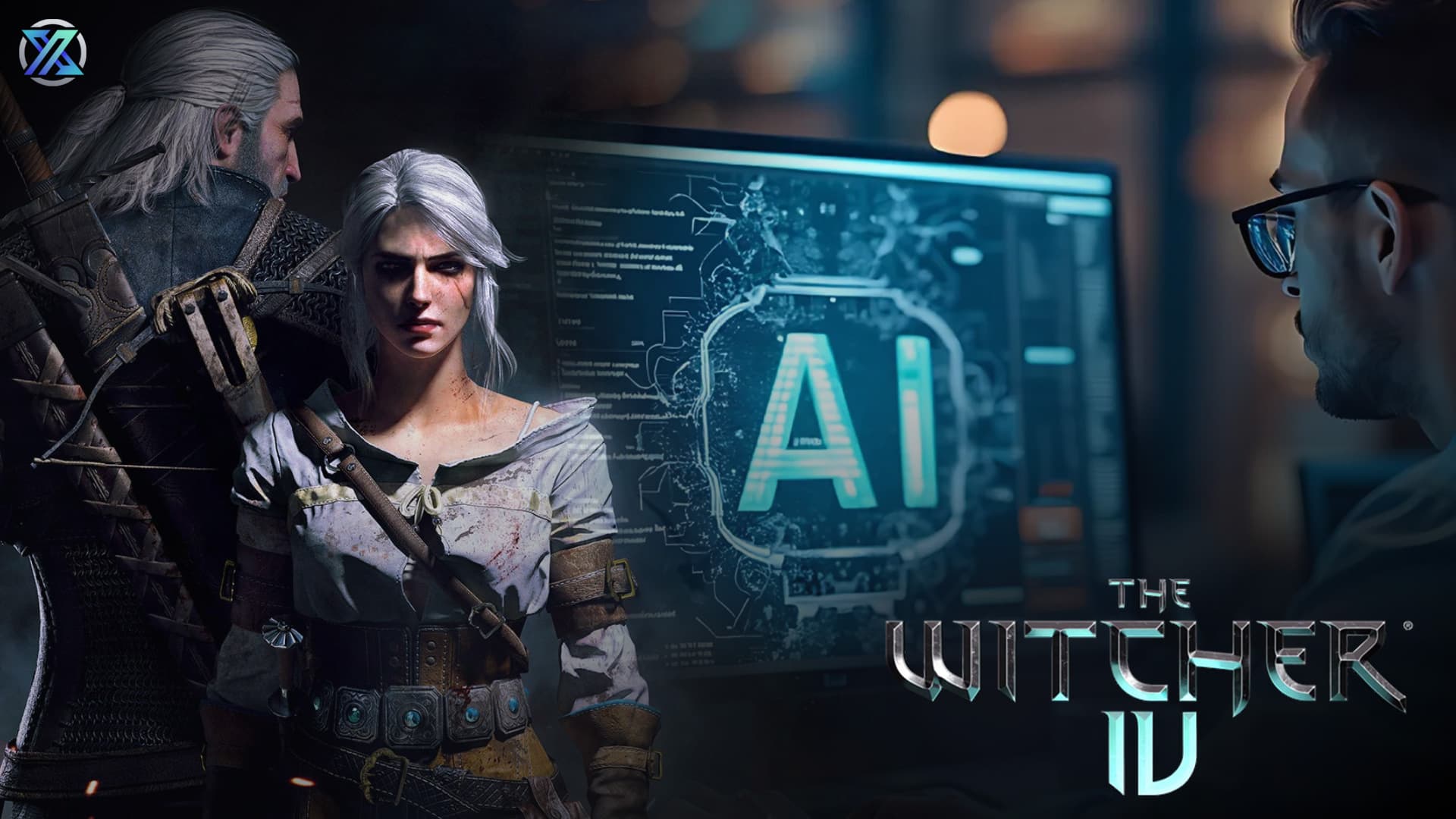
The ongoing debate around artificial intelligence in the gaming industry has taken a notable turn, as a developer working on The Witcher 4 has suggested that AI could bring meaningful, practical benefits to game development rather than replacing human creativity. The statement arrives at a time when AI tools are rapidly entering creative industries, sparking concern, curiosity, and cautious optimism in equal measure.
While AI remains a controversial topic among developers and players alike, the comments from the Witcher 4 development team indicate a more balanced and grounded outlook, one that views AI not as a shortcut or replacement, but as a support system that could streamline complex workflows, reduce repetitive tasks, and give developers more time to focus on storytelling, world-building, and gameplay innovation.
AI in Game Development : A Heated Industry Discussion
Artificial intelligence has become one of the most discussed technologies in modern game development. From procedural world generation to animation assistance and bug testing, AI-driven tools are already being tested across studios of all sizes. However, the rise of generative AI, capable of producing text, images, and even code, has also raised serious ethical and creative concerns.
Developers worry about job displacement, creative dilution, and over-reliance on automated systems. Players, meanwhile, are skeptical about AI-generated content replacing handcrafted narratives and artistic intent.
Advertisement
Against this backdrop, the Witcher 4 developer’s comments stand out for their measured tone. Rather than promising revolutionary changes or dismissing concerns, the developer emphasized practical use cases where AI can enhance development without compromising creative integrity.
A Tool, Not a Replacement
According to the developer, AI should be seen as a tool that assists developers, much like game engines, physics middleware, or motion capture technology. The core idea is not to let AI design quests, write characters, or replace artists, but to help teams manage the growing complexity of modern AAA games.
Large open-world RPGs like The Witcher series require massive amounts of content, dialogue variations, environmental assets, animations, and testing across countless player choices. AI, when used responsibly, can help handle repetitive or data-heavy processes, freeing developers to focus on creative decision-making.
Advertisement
The developer reportedly stressed that human judgment remains irreplaceable, particularly in areas such as narrative design, emotional storytelling, and artistic direction.
Potential Benefits of AI for Witcher 4
For a game as ambitious as The Witcher 4, AI could offer several behind-the-scenes advantages :
- Improved Testing and QA : AI systems can simulate thousands of gameplay scenarios, helping identify bugs, balance issues and quest-breaking problems faster than traditional testing alone.
- Smarter NPC Behavior : AI-assisted systems can help refine enemy patterns, crowd reactions and environmental interactions without scripting every possible outcome manually.
- Animation and Asset Optimization : AI tools can assist in cleaning up motion capture data, adjusting animations for different character models or optimizing assets for performance.
- Localization Support : With massive amounts of dialogue across multiple languages, AI can assist translators and localization teams by speeding up initial drafts and consistency checks.
These applications focus on efficiency rather than creativity, reinforcing the idea that AI works best as a supportive layer.
Advertisement
Why Is This Important For Modern AAA Games?
AAA games are becoming increasingly complex, expensive, and time-consuming to produce. Development cycles often stretch across five to seven years, with teams consisting of hundreds or even thousands of developers. As expectations rise for realism, scale, and interactivity, studios are under pressure to find smarter workflows.
AI offers a way to manage that pressure, if used carefully. The Witcher 4 developer’s comments suggest that studios like CD Projekt RED are exploring AI as a way to reduce burnout, improve iteration speed, and maintain quality, rather than as a cost-cutting replacement for staff. This distinction is critical, especially as the industry continues to face layoffs and restructuring.
Addressing Player Concerns About AI Content
One of the biggest fears among players is that AI could lead to soulless or repetitive content. Procedurally generated quests, AI-written dialogue, or generic character designs could undermine what made series like The Witcher beloved in the first place, rich storytelling, morally complex choices, and handcrafted worlds.
The developer reportedly acknowledged these concerns, reinforcing that AI-generated content would not replace narrative design or character writing. Instead, AI could help writers by organizing dialogue trees, tracking player choices, or flagging inconsistencies across branching storylines.
In other words, AI supports the creative process without dictating it.
Ethical and Creative Safeguards
Another key point raised was the importance of ethical AI use. Game studios are increasingly aware of concerns around training data, intellectual property, and transparency. The Witcher 4 team appears to be approaching AI adoption cautiously, ensuring tools are used in ways that respect creators and avoid legal or ethical gray areas.
This includes :
- Keeping humans in decision-making roles
- Avoiding AI-generated content trained on unlicensed material
- Maintaining clear creative ownership
- Using AI internally rather than as a public-facing shortcut
Such safeguards help preserve trust, both within development teams and among players.
A Broader Industry Shift Toward “Assisted Creativity”
The comments from the Witcher 4 developer reflect a broader industry trend toward what many call assisted creativity. Rather than fully automated content creation, studios are exploring AI as a productivity booster, similar to how artists use digital brushes or programmers rely on debugging tools.
Major studios across the industry are experimenting with AI-driven systems for level design prototyping, dialogue organization, and performance optimization. However, most agree that the heart of great games still lies in human creativity.
The Witcher franchise would be especially sensitive to over-automation, which makes the developer’s cautious optimism particularly noteworthy.
What This Means for Witcher 4’s Development?
While the developer did not reveal specific AI features planned for The Witcher 4, the comments suggest that AI will play a supporting, invisible role rather than a headline feature. Players are unlikely to notice AI directly, but they may benefit from smoother gameplay, fewer bugs, better balance, and more polished systems at launch.
If implemented well, AI could help ensure that Witcher 4 meets its ambitious goals without sacrificing the quality and depth fans expect from the franchise.
Community Reactions : Cautious but Curious
Initial reactions from the gaming community have been mixed but largely cautious. Some fans welcome AI if it helps reduce crunch and improve quality, while others remain wary of its long-term implications.
The reassuring factor for many is the developer’s emphasis on meaningful benefits rather than automation for its own sake. By framing AI as a behind-the-scenes assistant rather than a creative replacement, the message resonates more positively with longtime Witcher fans.
Conclusion
The Witcher 4 developer’s comments on AI highlight a realistic and responsible approach to emerging technology in game development. Rather than chasing trends or making bold promises, the studio appears focused on practical benefits, efficiency, consistency, and support for developers, while preserving the human creativity that defines great games.
As AI continues to evolve, its role in game development will likely expand. However, Witcher 4’s development philosophy suggests that the future of gaming lies not in replacing creators, but in empowering them with better tools.
For fans eagerly awaiting the next chapter in The Witcher saga, that balance may be exactly what the series needs to move forward without losing its soul.