

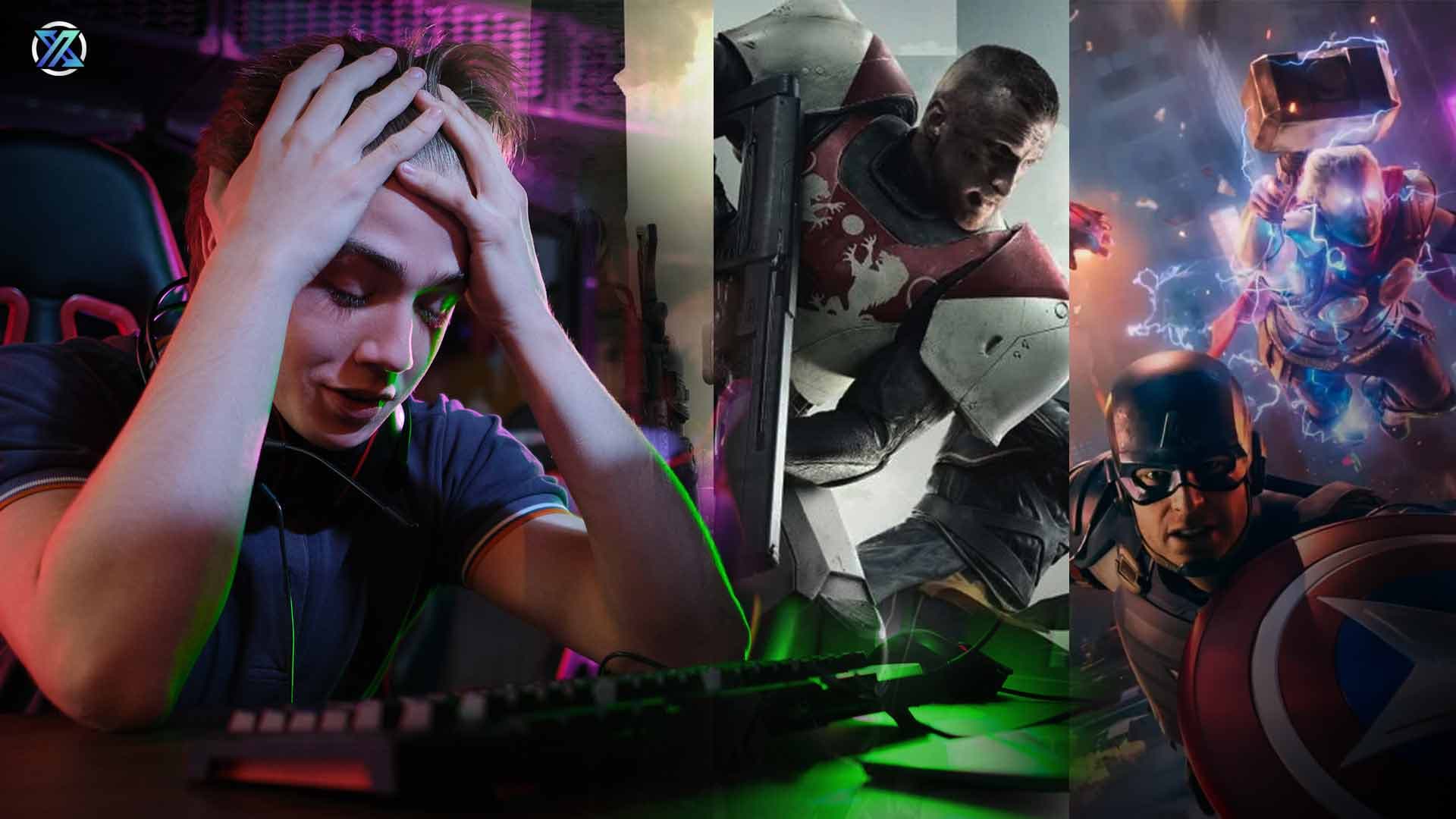
Welcome to 2026, where "we'll patch it later" is the official slogan of the AAA industry. If you feel like you’re drowning in Battle Passes and 'limited-time' skins that cost more than a weekend in Vegas, you’re not alone. The gaming industry is currently obsessed with finding the next 'infinite money glitch' which they're calling 'Live Service,' but these out-of-touch corporate executives have officially lost the plot.
Here is why the live-service dream is turning into a nightmare for gamers and why the gamers are absolutely losing it.
1. The Retention Grind Issue (You Only Have One Life, Literally)
The biggest lie executives told themselves during the 2020 pandemic was that the 'gaming boon' would last forever. They saw us all trapped inside our houses, trying to make Dalgona coffee and grinding Animal Crossing, and thought, "Great! Let's make 500 more games that require 20 hours a week!"
Advertisement
The problem? We have jobs and are working from the office now. As Tizzle brilliantly said, most of the gamers only have the bandwidth for one 'main' game - maybe two if they’re skipping sleep that night. To get a player to start your new live-service game, you're basically trying to convince them to 'divorce' Fortnite or similar games that they’ve already invested 2,000 hours and half their life savings into. That’s a domestic dispute right there.
2. Sony’s 2026 Roadmap (more like 'Off-road' Map)
Back in early 2022 and 2023, former PlayStation boss Jim Ryan went all-in on Live Service. Sony announced they had 12 live-service games in development and promised to release them all by March 2026.To make this happen, they bought Bungie (the Destiny developers) for billions of dollars, so that Bungie could act as a 'tutor' to help Sony’s single-player experts (like Naughty Dog and Insomniac) learn how to make games that never end.
Advertisement
Once Bungie started looking at the other studios' homework, the feedback was brutal. They basically told Sony, "These aren't very fun, and players won't stick around."
Advertisement
By late 2023, the wheels started falling off: Sony officially admitted they were cutting the 'March 2026' goal in half - aiming for 6 games instead of 12. The heavy hitters started dropping. The highly anticipated The Last of Us Online was officially cancelled because Naughty Dog realized it would "suck the life" out of the studio's ability to make single-player games. As we moved closer to the 2026 deadline, the live service push turned into a series of high-profile disasters like Concord, which launched in 2024, lasted roughly two weeks, and was shut down because almost nobody played it. The studio was eventually closed. 'Spider-Man: The Great Web,' showed a cool-looking multiplayer Spidey game from Insomniac - only for us to find out it had already been scrapped.
By the time March 2026 actually rolled around, Sony’s big 'Live Service Revolution' had mostly resulted in billions of dollars wasted, thousands of layoffs, and multiple beloved studios closed. The only real winners were Helldivers 2 (which was a massive, unexpected hit) and MLB The Show. Everything else? Well, it smells exactly like a ham sandwich left inside a car out in the sun, with the windows shut.
3. The 'Trust Tax' and the $100 Skins
On Reddit and Facebook, the atmosphere is crazy: gamers are experiencing 'Engagement Exhaustion'. Nobody wants a game that is an inch deep but a mile wide. Look at Splitgate 2 or Highguard - both tried to fly too high, too fast, and ended up crashing into a mountain of their own microtransactions.
It's time every studio understood the golden rule, which comes from a famous (and now somewhat controversial) GDC talk titled "From Box Products to Live Service" given by Justin Truman, the General Manager of Destiny 2, back in 2022.
Here is the breakdown of those three steps :
1. First : Trust (The First Date Phase)
Truman argued that you cannot monetize a player who doesn’t believe in you. After Destiny 2’s rocky launch in 2017, the community was essentially holding a megaphone and screaming that the game sucked. Bungie had to 'eat' revenue losses. They cut back on aggressive microtransactions, addressed player pain points (even if they didn't think they were the root problem), and focused on proving they actually cared about the game.
2. Then : Retention (The Keep 'Em Coming Back Phase)
You have to make sure you have given the players a reason to stay with the game before they start roasting your gaming studio on X. Bungie focused on secret missions (like Whisper of the Worm), deep narration, and challenging raids. They turned a one-time player into a 'hobbyist' who checks in every Tuesday because the world feels beautiful and rewarding.
3. Finally : Revenue (The Show Me the Money Phase)
Only after the first two are locked in do you start worrying about the bottom line. If players trust you and are playing 20 hours a week, they will want to buy the cool armour sets or the seasonal passes. Monetisation should feel like an optional tip for a great meal, not a cover charge for a mediocre experience.
Critics point out that once Bungie solved the trust and retention parts, the revenue phase started to feel a bit... aggressive. By 2026, many gamers feel like the trust part was just the bait, and the 'Revenue' part became the 'Core Model' of battle passes.
Many 'live-service wannabes' try to skip straight to Step 3 without doing the hard work of Step 1. They launch a bare-bones game with a $100 pack and wonder why the community vanishes in three weeks. They want the marriage without the first date.
4. The Arc Raiders Exception
It’s not all doom and gloom. Arc Raiders actually managed to cut through the noise this year. Why? Because they didn't treat their players like the owners of the Wayne Mansion. They ran open tests, genuinely listened to the inputs, and made the gaming experience better.
The lesson here is simple, yet somehow invisible to CEOs : Make a fun game first - everything else comes later.
Look at the original Fortnite (seriously, there can't be a better example) - it wasn't completely driven by calculated strategies built by cash collectors. It was organic, it was raw, it was fun, and that's exactly why people actually liked playing it.
The OrbeatX Verdict : Quality is Everything
We’ve officially reached a very 'hate-able' saturation. The message is loud and clear: Respect our time, or we’re going back to the games that deserve our hard-earned leisure time.
In a world where Hollow Knight : Silksong and Hades II provide 100+ hours of pure joy without asking for a monthly subscription, the 'Live-Service' label is starting to feel like a warning sign.
It’s time for executives to let creative guys make games the gaming community would actually want to play. Because right now, the only thing 'live' about most of these services is the sound of the servers getting unplugged.