


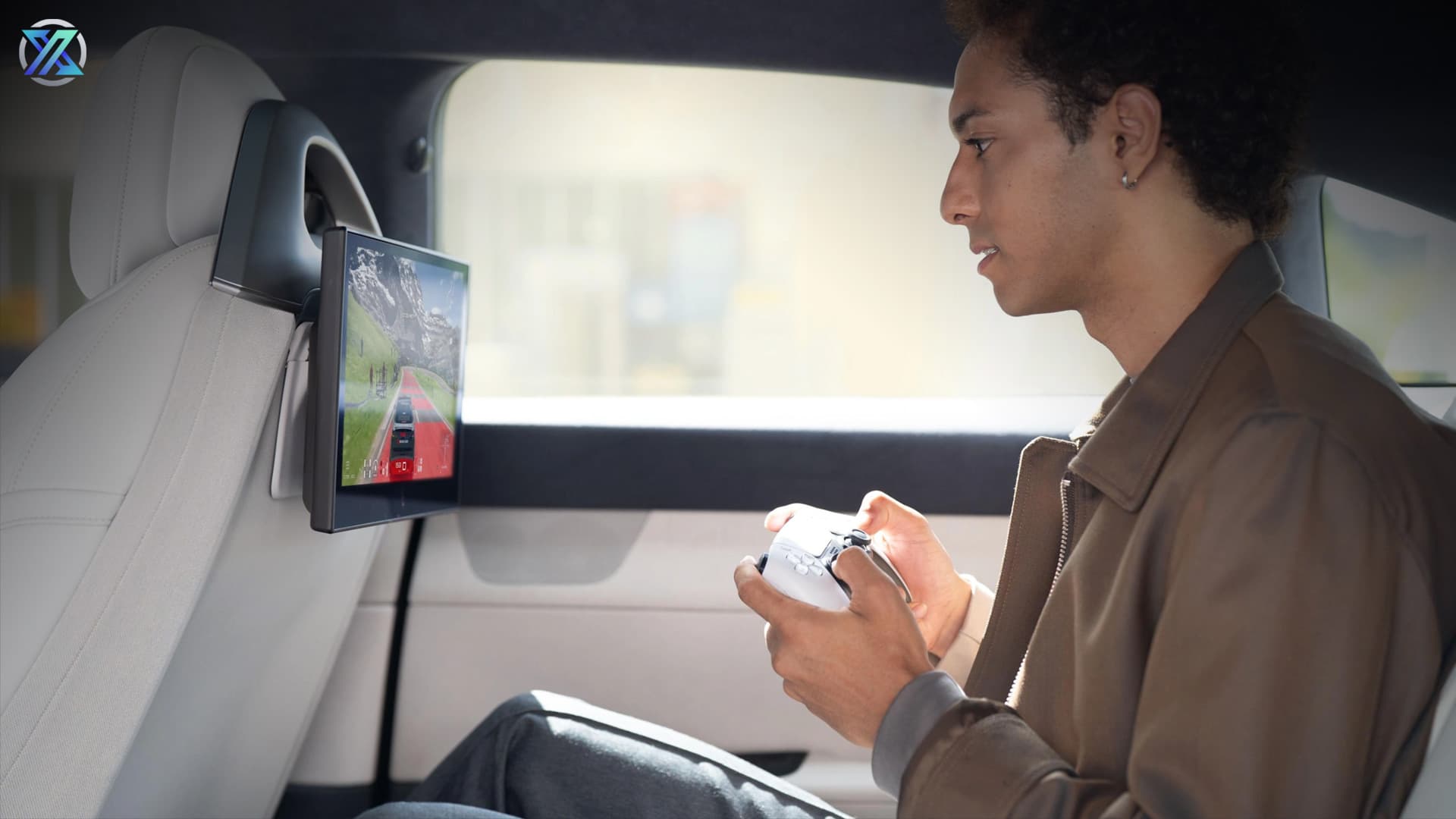
Sony and Honda have finally made public their latest joint automotive venture, an electric vehicle that is coining the term "transportation + entertainment + digital platforms" all at once. The news has been met with substantial response both from the automotive sector and from the gamers' world, largely due to the feature that stands out the most: the car’s infotainment system being equipped with native PlayStation Remote Play support straight away.
The car, which is a product of the Sony Honda Mobility agreement, is declaring that the new cars are not only the commuting kind anymore. They are turning into linked digital platforms, equipped with gaming, media streaming, productivity tasks, as well as real-time cloud services. Remote Play integration puts Sony and Honda's car in the category of next-gen smart vehicles targeted at a younger, entertainment-seeking, and tech-savvy audience.
A Strategic Alliance Between Two Giants
Sony and Honda initially revealed their collaboration with the intention of transforming the automotive market with innovation led by software. Honda is the one with a long history in the areas of automobile engineering, safety, and production, while Sony is the one with a strong background in the fields of entertainment, imaging sensors, AI, and gaming ecosystems.
Advertisement
This new automobile is the first and the most concrete output of the cooperation between them. In contrast to traditional cars, which usually concentrate on almost nothing but performance specs or range figures, the company is stressing on user experience, digital integration, and software capabilities, where the traditional automakers have frequently found themselves lagging behind the tech companies.
Advertisement
Enabling PlayStation Remote Play is a major sign of Sony's greater vision: liberating the PlayStation ecosystem not only from the constraints of living rooms but also from the limitations of everyday life.
What PlayStation Remote Play in a Car Really Means
The PlayStation Remote Play feature gives the user a chance to stream video games from his PlayStation console to a different device through the internet. In this scenario, the car's integrated screen turns into the remote gaming screen and not only the passengers but also the driver can access the PlayStation library without having to carry a console if the car is parked.
Advertisement
The system links up with a PlayStation 5 or PlayStation 4 that is located at a user's home, and it streams the game play to the car using the cloud connectivity. Controllers can be connected through a wireless connection, and the whole thing is designed to feel like a natural experience with very little delay if the network is stable.
Nevertheless, the main thing is that Sony and Honda have pointed out very clearly that the gaming feature will not work when the car is on the move, which was a concern from a safety and regulatory viewpoint. It is considered the primary use when the vehicle is parked, charging, or waiting, turning up the downtime into the entertainment time.
A Platform-First Approach to Vehicle Design
Sony and Honda are not treating software as a secondary consideration, instead, they are developing this car as a platform-first vehicle. The infotainment system functions as a digital center, merging gaming, music, movies, navigation, voice assistants, and third-party apps into one interface that is easy to use.
The entire dashboard is covered with large and high-resolution screens, which have specific areas for both the driver and passengers. The company’s display technology will let the driver see colors and details as if they were practically outside, while the audio division will present surround sound through the vehicle’s cabin that will be nothing less than immersive.
This strategy is in line with the wider automotive industry where, with time, vehicles are mostly referred to in the context of their software ecosystems rather than power and traction alone.
Beyond Gaming : Entertainment and Connectivity
While PlayStation Remote Play is the headline feature, the car’s platform goes far beyond gaming. Sony and Honda have confirmed support for :
- Cloud-based media streaming services
- Video conferencing and communication tools
- Personalized user profiles synced across devices
- AI-driven voice controls
- Over-the-air software updates
Passengers can watch movies, attend virtual meetings, or browse digital content, turning the car into a mobile living space rather than just a mode of transport.
Sony’s background in music and film also plays a key role, with deep integration of its entertainment catalog expected over time.
Advanced Sensors and AI Integration
Among the world's leading producers of imaging sensors, Sony is also the main supplier that has been recognized for contributing its exceptional skills to the new car. The advanced driver-assistance systems (ADAS), safety features, and future autonomous driving capabilities all rely on the multiple cameras and sensors that are placed all over the vehicle.
Real-time data collected from these sensors is analyzed by AI-driven systems in order to optimize lane detection, detect obstacles, and monitor the driver. The same AI system that handles the automotive functions also controls the infotainment system by noting the preferences of users and suggesting accordingly.
This collaboration of entertainment AI and driving AI marks Sony and Honda’s aim to establish a totally smart vehicle ecosystem.
Target Audience and Market Positioning
The target market for the car is quite obvious; it is the early adopters, tech enthusiasts, and digital consumers that come first, especially the young buyers that are after the software features as much as the traditional automotive specifications. Gamers would definitely find this feature very attractive, they can play with their PlayStation anywhere without needing any extra hardware.
But on the other hand, the company Sony and Honda is also aiming at families, professionals, and long-distance commuters who do spend a lot of time in their cars and thus want that time to be either productive or enjoyable.
By putting the car in the midst of a mobility issue and an entertainment platform, Sony Honda Mobility is building a unique character in the already competitive electric vehicle market.
Challenges and Practical Considerations
Although the new development has generated a lot of enthusiasm, there are still many challenges to overcome. One of them is that smooth Remote Play performance is only possible if reliable high-speed internet connection is available which brings the problem of network availability and data costs as the main factors affecting real-life usability.
There are also legal frameworks to consider. Area-wise, the regulations concerning in-vehicle screens and driver distraction are quite rigid, which means that the availability of particular features might depend on the region. Sony and Honda have capitulated this and reiterated that it is their policy to ensure safety first.
Power drainage is yet another issue. The use of high-resolution displays and gaming via streaming can greatly affect power efficiency especially in the cases where the device is being charged for a long time or it is just being used in the parked position for a long time.
Industry Impact and Competitive Response
The announcement has ignited a debate throughout the car industry. Tesla, Mercedes-Benz, and BMW have all done some experiments with car-play games and app ecosystems, but the tight coupling of a large gaming platform by Sony and Honda is a new standard setter in the market.
The other players might be feeling the heat to join hands with the entertainment or gaming sectors so that they could still be a part of the software-oriented automobile world. The matter could draw collaborations between carmakers and tech companies faster, thus transforming the future rides’ in-car experience.
For PlayStation, this decision is a gradual yet strategic move to shift from consoles only to a broader area of operation; in other words, it supports Sony’s vision of device-agnostic platforms.
What This Means for the Future of Mobility
The forthcoming car from Sony and Honda is not about a specific feature; it is rather a philosophy. The car is an expression of a future where cars are not only personalized digital environments but also very much alive through constant software updates and very much integrated with the overall ecosystem.
The PlayStation Remote Play is a bold and clear sign of that future, one that merges entertainment, connectivity, and mobility without any barriers. As vehicles turn out to be more intelligent and self-controlled, the experience of in-car entertainment will be even more important and the partnership between Sony and Honda will clearly be the one leading that transition.
Conclusion
The announcement of the new car from Sony and Honda that supports PlayStation Remote Play is a game-changing event for the automotive and gaming industries. It illustrates the transformation of cars into connected platforms that are equally concerned about user experience and mechanical performance.
The partnership between Honda’s engineering know-how and Sony’s power in entertainment and gaming is not just opening a new chapter but is also setting a bold standard for the future of modern cars. The future may still have some practical concerns to be addressed but one thing is crystal clear: the future vehicle is no longer a mere transport but a moving digital ecosystem.
As the work progresses and more information comes to light, one thing is clear: the companies Sony and Honda have managed to re-set the bar for what drivers and passengers can experience when they get into a car.