


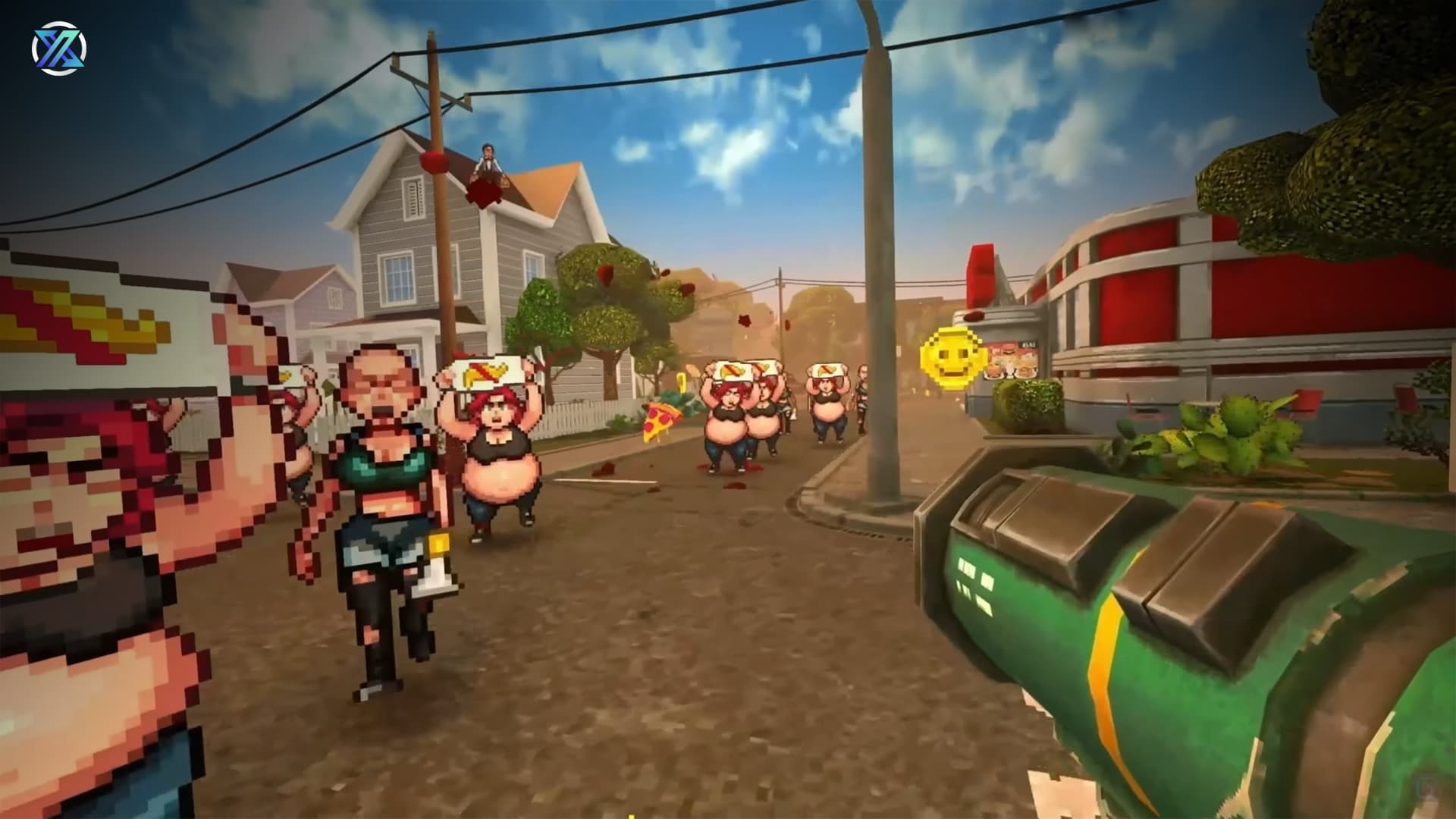
The Postal brand has always been a source of controversy, chaos, and hilarious satire, but the most recent offshoot has turned the tables in a surprising way that even the hardcore followers couldn't have guessed. The announcement of a new Postal spin-off title culminated in its sudden cancellation, which was mainly due to the uproar over the supposed use of generative AI-materials. The community's anger spread like wildfire across social media platforms, resulting in both criticism and confusion. The developer's quick counter, asserting that the claims were blown out of proportion, misinterpreted, or completely false, added to the noise of the controversy.
Thus, the issue went from a minor concern among fans to a much broader debate in the industry about the need for transparency, the preservation of creative integrity, and the ever-increasing conflict between human-developed and machine-made game content. Despite the controversy, the spin-off's cancellation is still very much alive.
Background : Postal’s Legacy and Why This Spin-Off Mattered
The Postal franchise has always had a divisive audience due to its signature violent humor, political satire, and the aspect of censorship that it has been rebelling against. The game studio Running With Scissors, which is responsible for the franchise's development, has been viewed as a source of controversial games that strive for, and often get, it. Throughout the years, the series has turned into a cult classic, with its followers now expecting nothing less than radical innovations and hyperactive mayhem.
Advertisement
The news of a new spinoff, rumored to be of a minor scale and to be co-produced with an indie studio, first sparked interest. The first marketing materials seemed to present a more glamorous and comic view of the Postal universe, also taking into consideration the comic aspect of it more than the rawness of shock value through obtaining the latter. Yet, the hope didn't last long. When the promotional visuals and character concepts started to go around on the internet, gamers pointed out that the look of some of the features was very much like the one of AI-generated ones and not of human artists' input.
Advertisement
It did not take long for the claims of “AI laziness,” “asset recycling,” and “low-effort development” to surface, and they soon took over the stage that was meant for a quirky offshoot project. This abrupt change of public mood paved the way for what would later turn out to be one of the hottest gaming controversies of the year.
The Gen-AI Accusations : How the Uproar Started
The commotion broke out when some people in the Twitter world, Reddit, and game-dev forums pointed out some inconsistencies in the game’s promotional art. They pointed at fingers with strange forms, lighting that was not coordinated, textures that were distorted, and different styles of painting, visual signs that are usually linked with machine-generated images that are of low quality or done in a hurry. These discoveries fanned the flames of the social controversy around the game very quickly and even wider protests against the game erupted.
Advertisement
Now, the critics said that the use of AI-generated assets without notifying the consumers did not only undermine the labor of artists but also particularly in the case of a franchise that had always been proud of its personality-driven designs it was like killing it softly by their art. Others said it was a dangerous precedent for small studios that would under the guise of “creative innovation” use the shortcut of cutting corners. The reaction went beyond just the fans; a number of indie developers echoed the accusations by saying that the creators had devalued the craft.
The debate got louder when pictures that were claimed to show AI-written dialogue leaked. The critics argued that the writing had fake phrases and overused jokes, characteristics that are often associated with generative text models. It is not known whether these samples were authentic or altered, but their spreading increased the belief that the game had a very heavy reliance on generative AI.
At the end of the week, the plot had thickened. The scenario which had begun as an assumption drawn by the internet had grown into a massive backlash, which led to boycotts being called for, transparency demanded, and even the project appeal to Running with Scissors to terminate it altogether that were made.
Developer Denial and Conflicting Accounts
The indie studio that created the spin-off, in reaction to the increasing disorder, issued a long public statement vigorously denying the charges. The developers, to their defense, said that the accusations were greatly exaggerated and based on inaccurate perceptions of their artistic process.
Developer’s Key Claims
- The controversial early assets were basic, rough and not meant for public release ever.
- AI models were not a part of generating any of the final game assets.
- In the whole process only internal brainstorming tools like mood board generators were used, which they claim is a process that many studios already depend on.
- The leaked dialogue snippets were either made up or taken from the automated tools used for prototyping, definitely not from the final writing.
- The team was very clear that the spin-off was in "extremely early pre-production" and that no content attributed to AI actually reflected the work being done. They were very adamant that the final game would have solely human artists, writers, and designers.
Running With Scissors also came forward, backing the studio’s explanation but admitting that there had been miscommunication regarding how early assets got to the public. Many fans, however, despite the defense, still remained unconvinced. They argued that the damage to public perception was already done.
Shutdown Decision : A Mix of Pressure, Confusion and PR Fallout
Not too long after the studio’s response, the publisher announced what was already expected that the Postal spin-off was officially dead. The announcement mentioned “community concerns” and the intention to “safeguard the integrity and creative identity of the Postal franchise” as reasons for the cancellation.
People close to the matter indicate that various reasons led to the termination of the project :
- Community Pressure : The massive backlash turned the situation around so bad that it was hard for the game to receive any positive interaction at all. Long-term brand damage risk was too high for a franchise that already has its public relations walking on a pretty thin line.
- Miscommunication and Premature Leaks : It was said that early concept art, draft scripts, and non-final assets were all shared too soon, either by accident or through unauthorized leaks. Without context, fans thought these were done or almost done materials.
- Internal Tension : Some insiders suggested a clash of opinions between the indie studios and Running With Scissors as far as creative direction and openness are concerned. The controversy just made those differences bigger.
- Market Climate : The gaming industry in 2025 is exceedingly sensitive to AI ethics. A project can be quickly derailed with even a small amount of AI misuse suspicion, confirmed or not. Even larger studios are under the radar; for a small indie collaborator, the stakes were even higher.
Whichever the exact cause, it was the same outcome: the project got scrapped, the people working on it got reassigned and the spinoff was all but gone from the radar just as fast as it came.
Industry Reactions : Another Flashpoint in the AI Creativity Debate
The scenario once again kindled the persistent controversy regarding the part of generative AI in creating games. A large number of independent game developers, actors, artists, and writers have repeatedly voiced their concerns that if the use of AI tools is not properly regulated or disclosed, human creativity may get replaced or at least weakened.
Voices Against AI Usage
Critics argue that :
- AI erodes opportunities for human artists.
- It devalues creative labor if studios rely on machine-generated shortcuts.
- Lack of transparency harms consumer trust.
- AI-generated assets often introduce ethical and copyright issues.
For many, the Postal spin-off became another example of why stricter guidelines are needed.
Neutral and Supportive Views
Nonetheless, some developers backed the indie studio. They pointed out that AI tools are capable of enhancing the flow of work without taking over the role of the artists. Mood boards, rough sketches, lighting references, or dummy text are typical applications which do not lessen the final value of the artwork.
They claimed that the public outcry on the internet got out of hand too soon, inflicting a small group with a punishment that had no factual basis.
Nevertheless, the argument will attract different opinions; it will also open up a discussion on the issue of AI’s role in the gaming industry which is still fragile and emotionally charged.
What This Means for the Postal Franchise (and Future Projects)
The cancellation brings up the issue of the future of the Postal franchise. Running With Scissors has always been a company that depends on radical initiatives, but this mess shows that development ethics-related controversy, not humor, can have much more damaging consequences.
The company has indicated that another spin-off or side project will be replacing the one that has been canceled. Moreover, they pledged to be more open in the initial phases of development and also be more careful concerning what assets get for public sharing. Fans on their part are waiting with caution, hoping that there will be a project that can somehow capture Postal’s chaotic charm without getting involved in another PR storm.
The whole industry is monitoring the situation as well. This incident might affect how the studios will be talking about the generative tools they use, especially in the case of early prototypes. It also functions as a reminder that, in the gaming industry of today, perception is as crucial as the real production practices.
Conclusion : A Short-Lived Project with Long-Lasting Lessons
The termination of the Postal spin-off is not merely a withdrawn game, it shows the changing difficulties that the developers need to cope with in a situation where AI tools are becoming both more widely used and more debated. Regardless of the truth behind the accusations, the matter brings out the need for openness, dialogue and a thorough grasp of the communities' expectations.
On the one hand, the developer refutes the allegations and claims that no final game content was based on AI, but on the other hand, the storm shows a video game audience that is more and more protective of creative authenticity. The end of the spin-off is just another reminder that the current gaming industry is where trust is easily lost, perception is very strong and the difference between innovation and backlash has never been so small.